Rose Gordon Burbank
The Power of the Dog (Thomas Savage Edition)Rose Gordon Burbank is shaped by two marriages and by the work of continuing after loss. As Johnny Gordon’s wife, she shares his precarious life at The Inn in Beech; as a widow, she raises Peter and tries to keep the business going despite its association with tragedy. George Burbank later offers companionship and a way for Peter to continue his education. Rose’s story also briefly intersects with the return of Edward Nappo and his son to their ancestral land, a journey constrained by the reservation system.
Identity and Early Life
Before her life in Beech, Rose was a young woman in Chicago, where Johnny was completing a medical internship. He had built up a romantic ideal of a tender, steadfast woman while visiting a movie theater; the woman at the piano there turned out to be Rose, whom he had seen on earlier visits. Their first meeting therefore comes to the reader through Johnny’s longing, but Rose is not simply an image in that fantasy: the encounter leads to a marriage whose emotional significance is conveyed through her own presence and decisions.
A few nights after their meeting, Rose agreed to marry Johnny. He was overcome by the sense that his life was incomplete without her and by fear he could not clearly identify. Her father advised him to be good to her, and Johnny promised that he would. This exchange establishes the promise at the center of their marriage before the narrative shows the strain of the life they make together.
Marriage to Johnny Gordon
In Beech, Rose hears Johnny repeatedly regret that they moved there. She answers with an imploring look but does not speak, a small pattern of silence that holds both her desire to comfort him and her wish that he stop repeating his despair. The windmill behind The Inn, which turns uselessly and makes sleep difficult for passing guests, gives the setting a persistent, unresolved noise. Johnny’s unsuccessful attempt to stop it ends with him leaving it alone; Rose’s life there likewise continues without the imagined repair or escape.
Their marriage is also set against the hopes Johnny carried from Chicago. He had imagined a domestic refuge, complete with a vine-covered cottage and a white picket fence. Beech does not fulfill that picture. The narrative does not make Rose responsible for the failure of the dream; instead, her quiet response to Johnny’s regret marks how little room their circumstances leave for easy reassurance.
Widowhood and The Inn
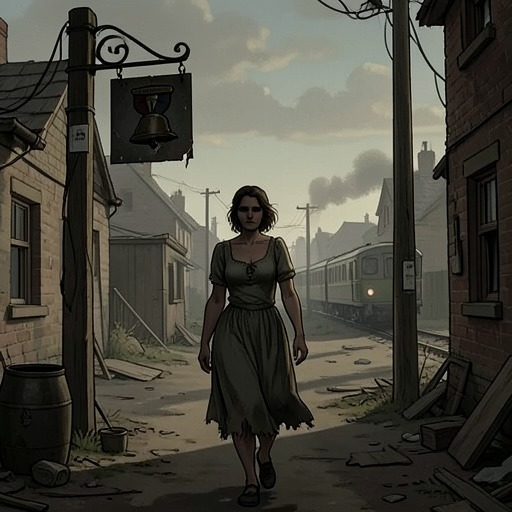
After Johnny dies by suicide, Peter finds him in the upstairs room and must work out how to tell his mother. The death becomes public knowledge, and neighbors and tourists identify The Inn as the place where it happened. Rose nevertheless runs it as an eating house. The sight of her carrying out ordinary tasks—taking clothes from the line and watering flowers—contrasts with visitors’ appetite for signs of tragedy. They look toward her and Peter as if their faces might disclose some remaining trace of what happened.
The Inn’s reputation initially limits its trade, since customers imagine that the room where they eat lies beneath the room associated with the death. Over time, the circumstances around the business change: The Inn is painted red and renamed the Red Mill, new bartenders appear, and travelers passing through Beech become less governed by the old story. Rose’s continued work thus takes place within a public narrative she did not choose, even as the town’s attention shifts.
Marriage to George Burbank
George courts Rose with deliberate formality, first asking that they use each other’s first names and then asking her to marry him. Rose does not pretend surprise or offer a simple assurance. She tells him that she loved Johnny and does not know whether a woman can love twice. George accepts that uncertainty and offers to put Peter through school, leaving open the possibility of any school. His proposal addresses both her feelings and a practical concern for her son.
They marry after Christmas in the rectory at Herndon. Rose wants the ceremony to be private because of Peter, and George appears to understand; he smiles rather than pressing her to invite people. She has felt the cold in the house on her first visit, a detail that makes the move into her new home register as an experience to be endured as well as a change in marital status. The evidence presents their marriage as considerate, but does not suggest that it erases her earlier attachment or removes every difficulty of entering the Burbank household.
Attention to the Nappos
Rose’s brief observation of Edward Nappo and his son carries a wider history into domestic conversation. The valley’s Indigenous people have been driven from their lands and sent to a reservation; its rules prohibit leaving without a permit, granted only for pressing reasons. Against that background, Rose sees the Nappos’ cart on the road and tells George about it during a conversation interrupted by thunder. She has watched them stop, lead their old horse, climb back into the cart, and later get out again to lead it over a rise.
Her report establishes close attention to their difficult progress, not what she knows about their permission or what she ultimately does for them. That restraint matters: Rose is shown noticing people whose movement is restricted, while the narrative places their journey against the machinery of dispossession. Her life in the novel is similarly marked by endurance and observation—first of Johnny’s unhappiness, then of the public afterlife of his death, and later of a family travelling across land from which its people have been expelled.